overlap-and-complement-counting
Two classifications partition a population (red/white × high-top/low-top) or we want 'at least one' adjacent pair. Direct counting tangles the cases; the trick is either a 2×2 contingency table (inclusion-exclusion) or counting the complementary event and subtracting from 1.
How to solve
- Change the two fractions in problem 19 (3/5 and 2/3) to (4/7 and 3/4) — table arithmetic changes, structure identical
- For problem 25 style, change rows × seats from 4×3 to 3×4 or 5×2 — the per-row adjacent count formula updates
- Try 'maximum red-high-top' instead of minimum to flip the optimization
Sub-archetype mix (6)
Click a row to see member problems.
- two-set-pie-solve 27% (13)
The universe is partitioned by two (or three) overlapping sets with known individual and union sizes; apply |A∪B| = |A|+|B|−|A∩B| to find the intersection or a specific region cell.
- contingency-table-optimize 15% (7)
Two binary attributes cross-classify a population into a 2×2 table whose row and column totals are given (often as fractions); find the minimum or maximum of one cell, or fill all cells from the totals.
- complement-forbidden-arrangement 15% (7)
Count valid arrangements or outcomes by computing (total − forbidden), where the forbidden set is structurally defined by an explicit rule such as adjacency, a blocked grid point, a required prefix, or graph distance.
- at-least-one-complement 27% (13)
Find the probability that at least one target event occurs across draws, positions, or trials by computing 1 minus the probability that no target event occurs; applies to independent repeated trials, geometric probability, and multi-location PIE.
- parity-partition-complement 10% (5)
Partition the outcome space by even/odd parity and use the complement 1−P(all odd) to find P(product or sum is even), or directly count the (odd, even) and (even, odd) cases when the target requires exactly one even factor.
- geometric-area-inclusion 6% (3)
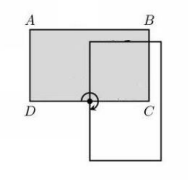
Two overlapping geometric shapes or a region partitioned by a path; apply Area(union) = Area1 + Area2 − Area(intersection), or establish an area-balance equation between inside-circle/outside-square regions to find total covered area or a radius.





More data (year-over-year, tool fingerprint, grade distribution, all members)
Tool fingerprint (1–17)
Grade distribution
- Gr 2 2
- Gr 4 8
- Gr 5 1
- Gr 6 8
- Gr 7 24
- Gr 8 4